







Modern Web Development with React: Building Interactive UIs

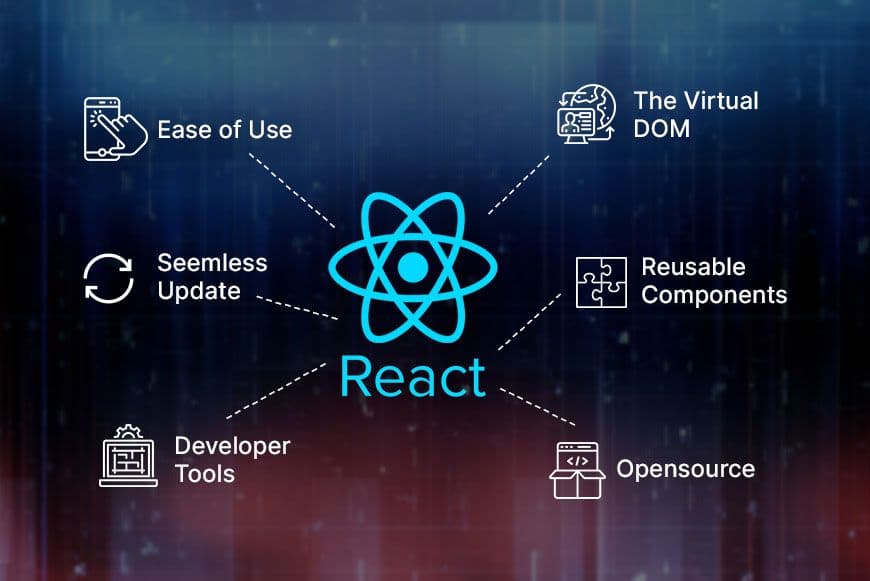
Modern web applications demand rich interactivity, fast performance, and maintainable codebases. Traditional approaches to frontend development struggled to scale as interfaces became more dynamic. React, developed by Facebook, emerged as a solution by introducing a component-based architecture that allows developers to build user interfaces as small, reusable pieces.
This shift fundamentally changed how developers think about UI design, emphasizing composition, reuse, and predictable data flow.
Declarative UI and the Virtual DOM
At the core of React lies its declarative programming model. Instead of manually manipulating the DOM, developers describe what the UI should look like for a given state, and React handles the updates automatically. This abstraction simplifies debugging and reduces unintended side effects.
React’s virtual DOM further enhances performance by minimizing direct interactions with the browser’s DOM. By efficiently calculating the minimal set of changes required, React ensures smooth updates even in complex and highly interactive interfaces.
Managing State in Modern React Applications
As applications grow, managing state becomes a critical challenge. Modern React development addresses this through built-in hooks and external state management libraries.
Hooks such as useState, useEffect, and useContext enable developers to manage component state, handle side effects, and share logic across components. For larger applications, libraries like Redux or Zustand provide structured and scalable approaches to global state management, improving predictability and maintainability.
The Modern React Ecosystem
React does not exist in isolation. It is supported by a rich ecosystem of tools and libraries that streamline development and deployment.
Modern build tools, component libraries, and testing frameworks integrate seamlessly with React, enabling developers to create responsive, high-performance applications. Features such as code splitting, lazy loading, and optimized bundling further enhance user experience by reducing load times and improving responsiveness.
Conclusion: A Foundation for Interactive Web Experiences
React has become a cornerstone of modern web development by offering a flexible, efficient, and developer-friendly approach to building user interfaces. Its component-based design, declarative syntax, and powerful ecosystem make it well suited for creating scalable and interactive applications.
As web technologies continue to evolve, React remains a strong foundation for delivering seamless user experiences, demonstrating how thoughtful abstractions can simplify complexity while enabling innovation.
References