









What If a Physical Therapist Could Feel Your Steps Through a Robot?

The Setup: The Limits of Two Human Hands
Nearly 800,000 Americans survive a stroke every year, and for many, relearning to walk is one of the hardest parts of recovery. Conventional physical therapy relies on a therapist's hands-on guidance — but a therapist can only physically influence a limited number of movements at once, which usually means focusing on a single piece of gait at a time. More complete, whole-body training often requires multiple therapists working together, which most clinics simply can't staff.
The Breakthrough: Two Exoskeletons, Virtually Tied Together
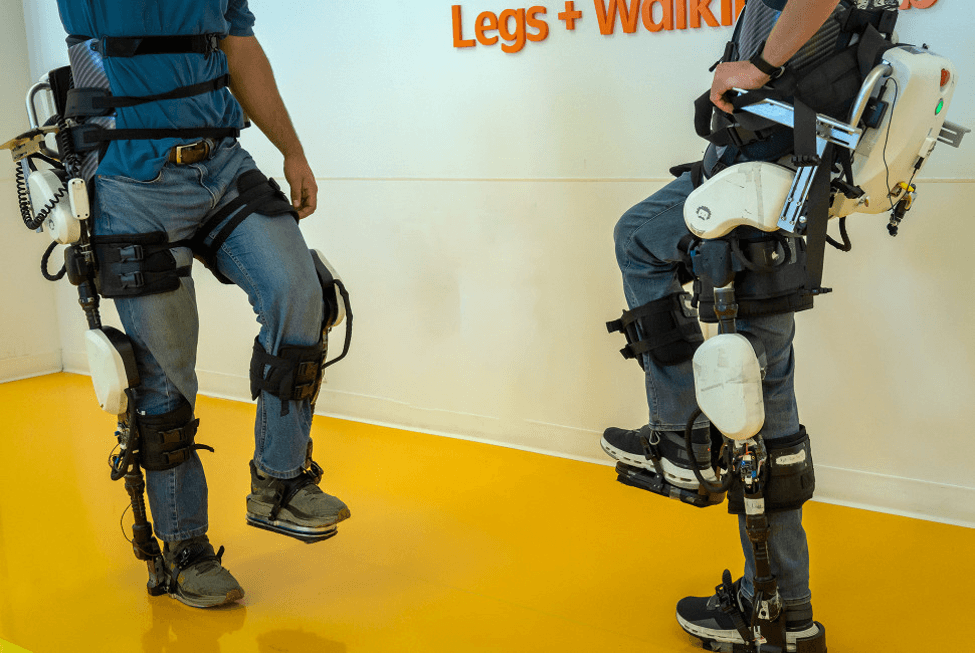
Researchers at Northwestern University and Shirley Ryan AbilityLab, led by José L. Pons, built a system called therapist-exoskeleton-patient interaction, or TEPI. A therapist and a stroke survivor each wear a lower-limb exoskeleton, and the two are virtually connected at the hips and knees through a link that behaves like a combination of springs and shock absorbers. As the therapist moves, the patient feels that influence through their own exoskeleton, and vice versa — letting the therapist continuously adapt support and resistance based on how the patient is actually performing, in real time.
In evaluations with eight stroke survivors, published in the journal Science Robotics, TEPI outperformed conventional therapist-guided treadmill training on several measures: greater joint range of motion, and longer, higher steps, while muscle activation stayed comparable to standard therapy. Participants also reported high levels of motivation and enjoyment.
Why It's Bigger Than It Looks
Existing rehabilitation exoskeletons already exist, but most rely on fixed movement patterns that don't adapt to how a specific patient is doing on a specific day. TEPI's real innovation is the virtual connection that lets a human therapist's judgment and touch scale through robotics, instead of being replaced by them — combining the adaptability of hands-on therapy with the scalability and precision of robotic systems.
The Part Nobody Talks About: This Protects Therapists Too
Hands-on gait therapy is physically demanding work, and repeated strain contributes to fatigue and injury among therapists themselves — a quieter workforce problem in physical rehabilitation. By letting therapists guide a patient's movement through their own legs rather than direct physical manipulation, TEPI could reduce exactly that kind of physical toll, potentially extending therapists' careers as much as it improves patient outcomes.
Conclusion: Recovery, Not Replacement
This isn't a story about robots replacing physical therapists — it's about robots letting one therapist's expertise reach further and adapt faster than two human hands alone ever could. The Northwestern team's next steps include testing the framework on overground walking, stair climbing, and sit-to-stand transitions, and exploring more accessible systems that could eventually bring this kind of guided, adaptive therapy into patients' homes.
References:
2. https://www.science.org/doi/10.1126/scirobotics.adz9628